




Why Speed Ratings Matter More Than Capacity
For casual photography, capacity is the main question. For professional video, it's the opposite — sustained write speed is what determines whether your footage actually gets written to the card without interruption.
Two rating systems matter here:
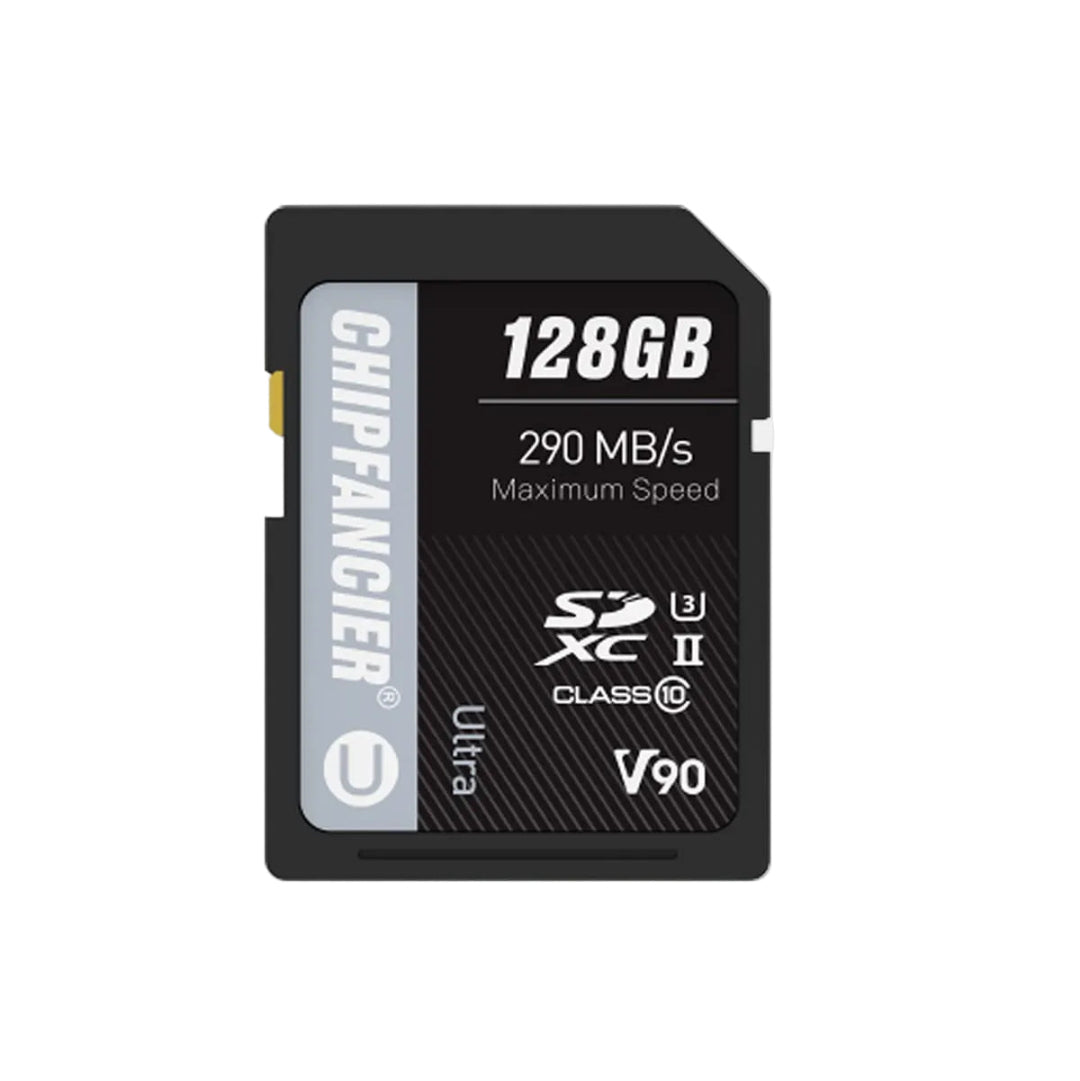
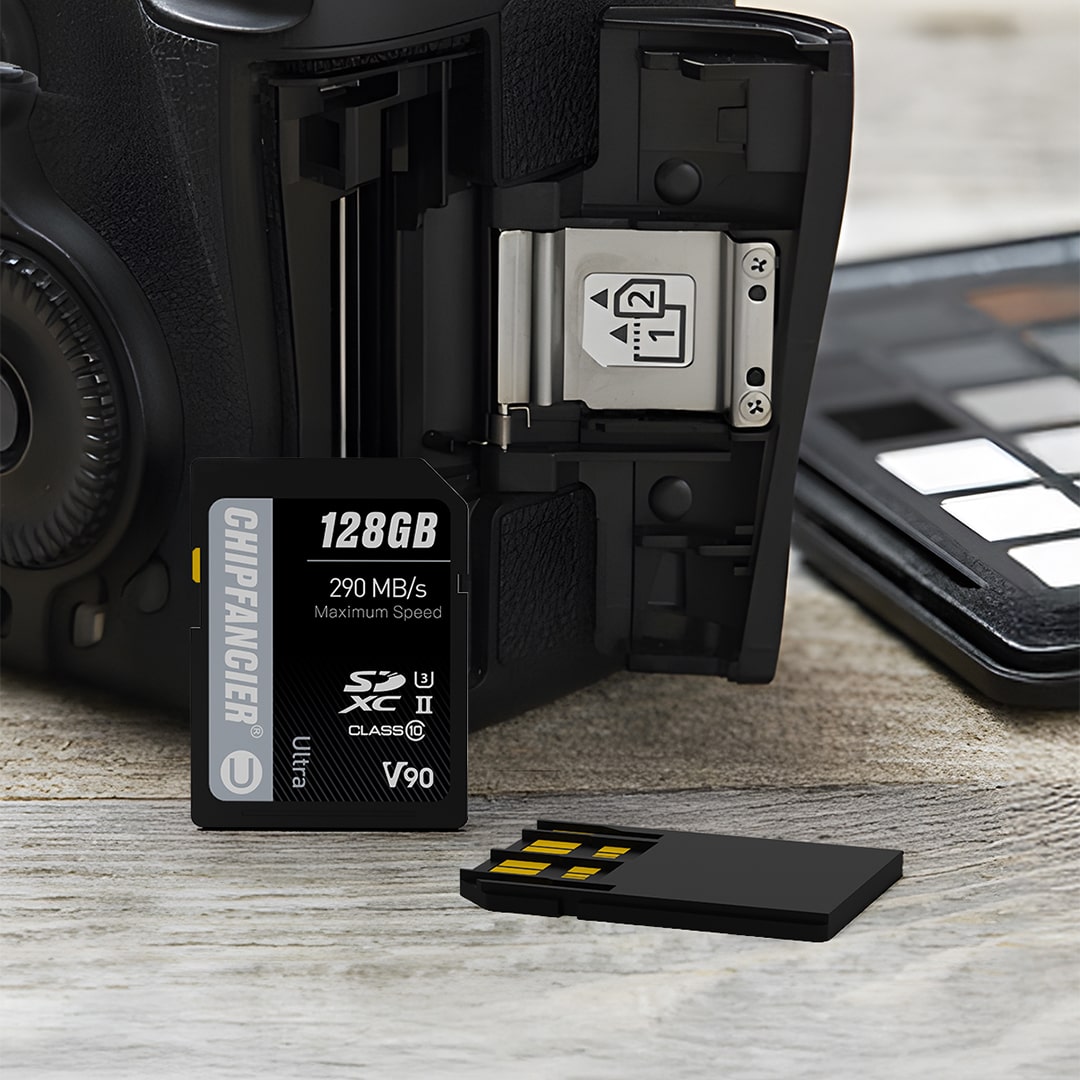
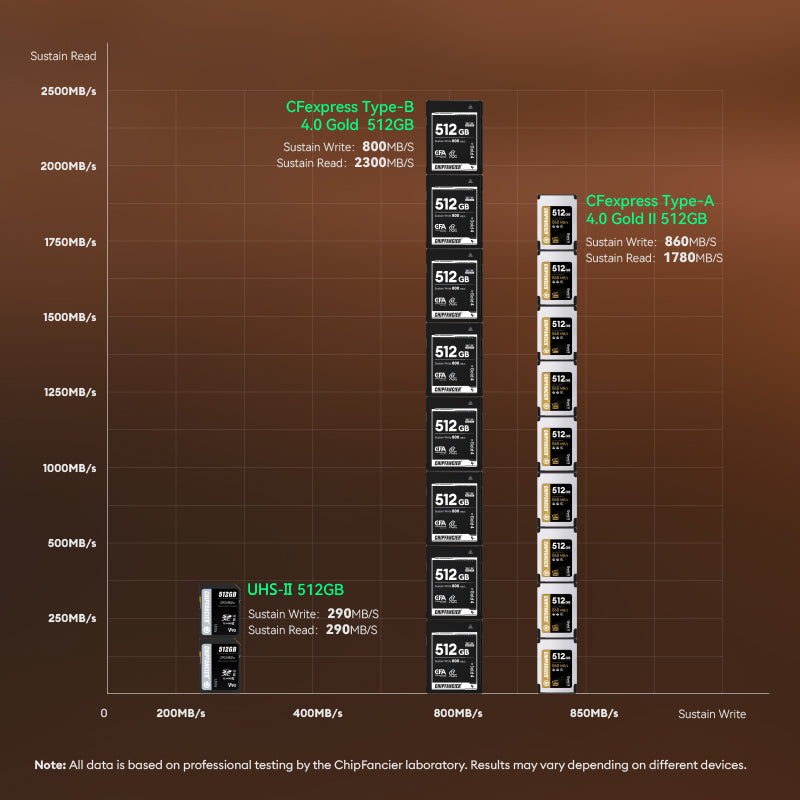
- V-rating (Video Speed Class): guarantees a minimum sustained write speed. V90 guarantees at least 90MB/s sustained — the highest tier in the SD standard.
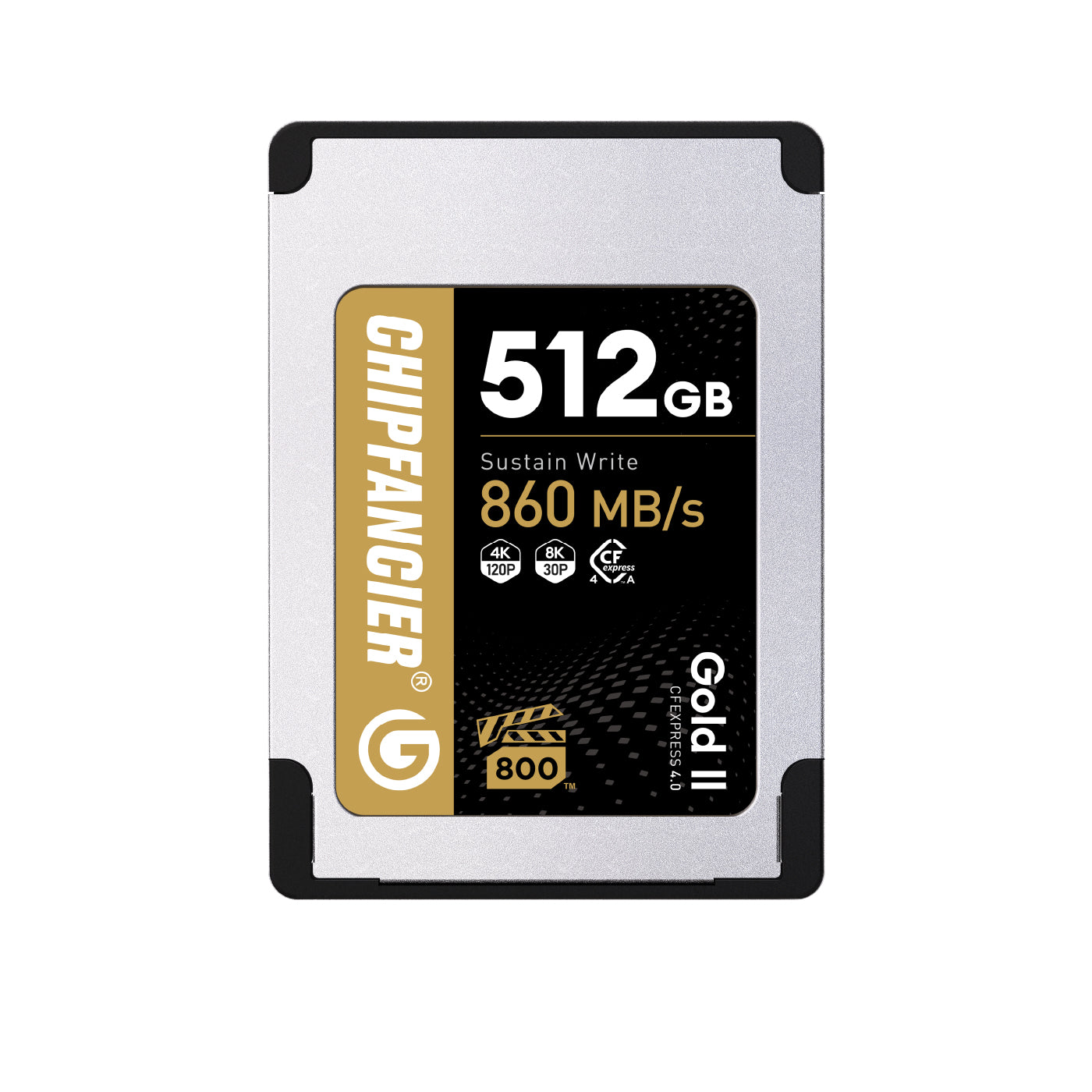
- VPG (Video Performance Guarantee): used for CFexpress cards, guarantees sustained write speed under real recording conditions, not just burst speed. VPG800 guarantees a minimum of 800MB/s sustained.
This distinction is why two cards with similar "max speed" marketing numbers can perform very differently once you're actually recording high-bitrate footage for an extended take.
SD V90: The Professional Standard That Still Works Everywhere
Best for: Mirrorless hybrid shooters, documentary and run-and-gun video, high-fps 4K, professional photographers doing extended RAW burst sequences.
V90 remains the top tier of the SD standard and is still the primary card slot on a huge range of cameras — Sony Alpha and FX series, Panasonic Lumix, Nikon Z-series, Fujifilm X and GFX bodies, and many professional camcorders.
Why creators choose V90 over lower-rated SD cards:
- Sustained 90MB/s+ write speed handles 4K 60p/120p and high-bitrate codecs (like All-Intra or ProRes on supported bodies) without dropped frames
- Reliable for long-form documentary and event work, where a card has to sustain recording for extended periods, not just short bursts
- Broad compatibility means one card format across multiple camera bodies and readers
Where V90 hits its ceiling: 8K video, extremely high-bitrate RAW video, and the highest frame-rate slow-motion modes on modern mirrorless flagships increasingly exceed what SD — even at V90 — can sustain. That's where CFexpress comes in.
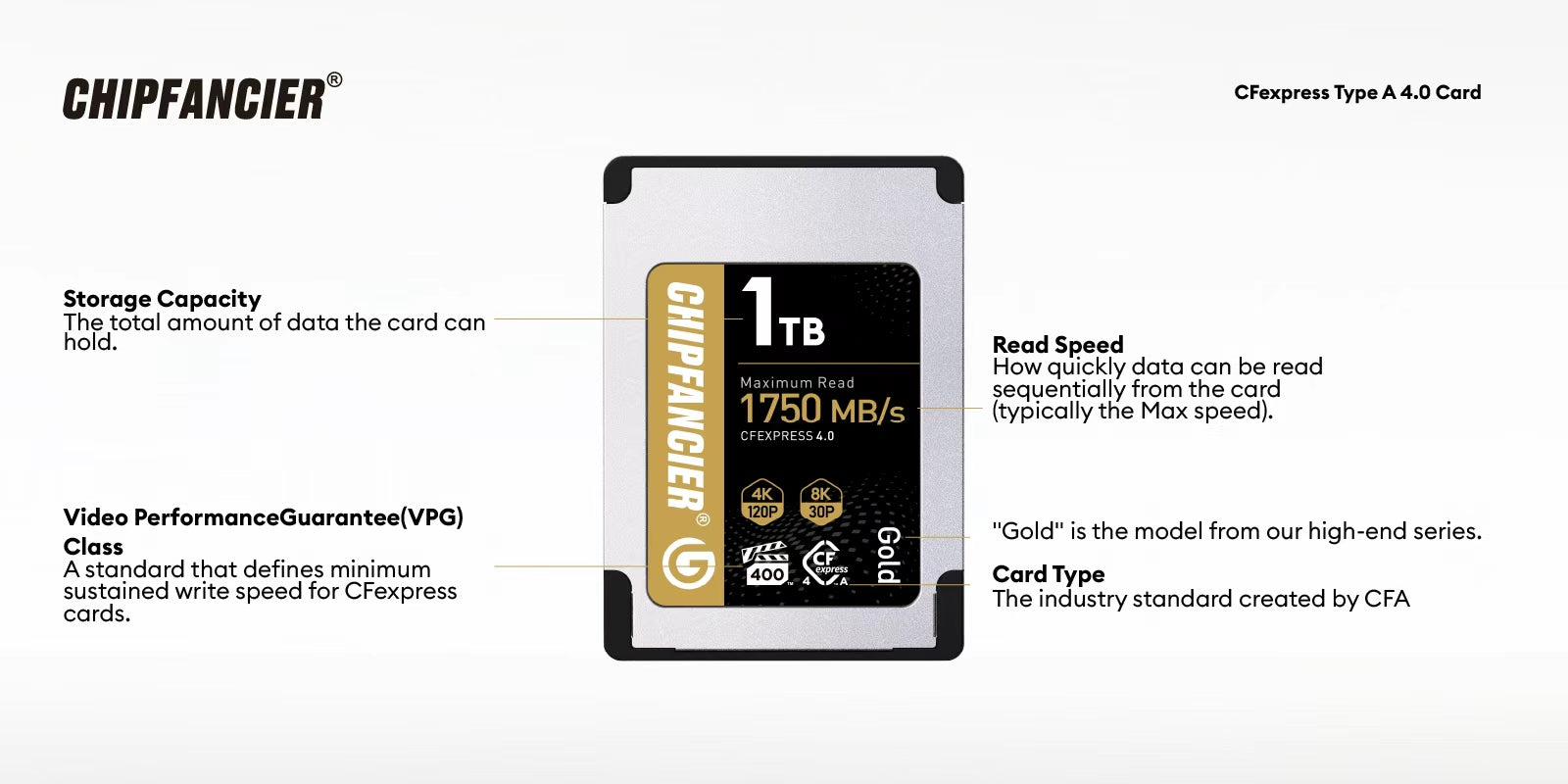
CFexpress Type A (VPG800): High Performance in a Compact Body
Best for: Sony full-frame mirrorless shooters (A7S III, A1, A9 series, FX3/FX6), anyone who needs CFexpress-class speed without switching to a physically larger card format.
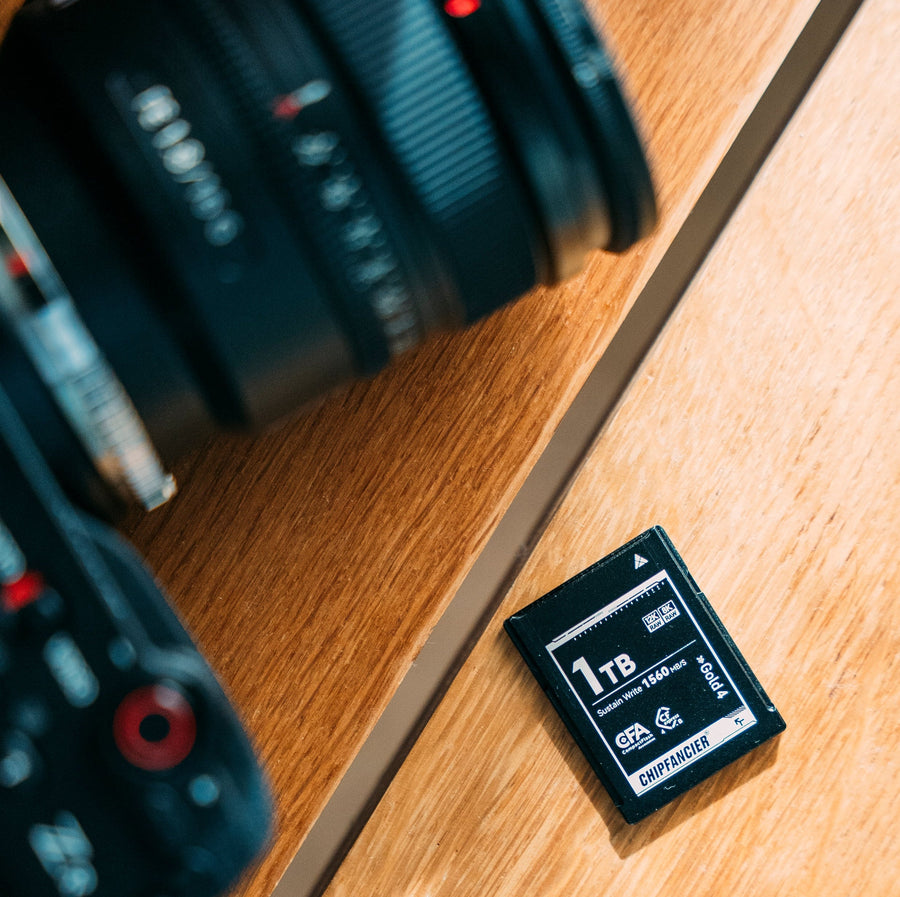
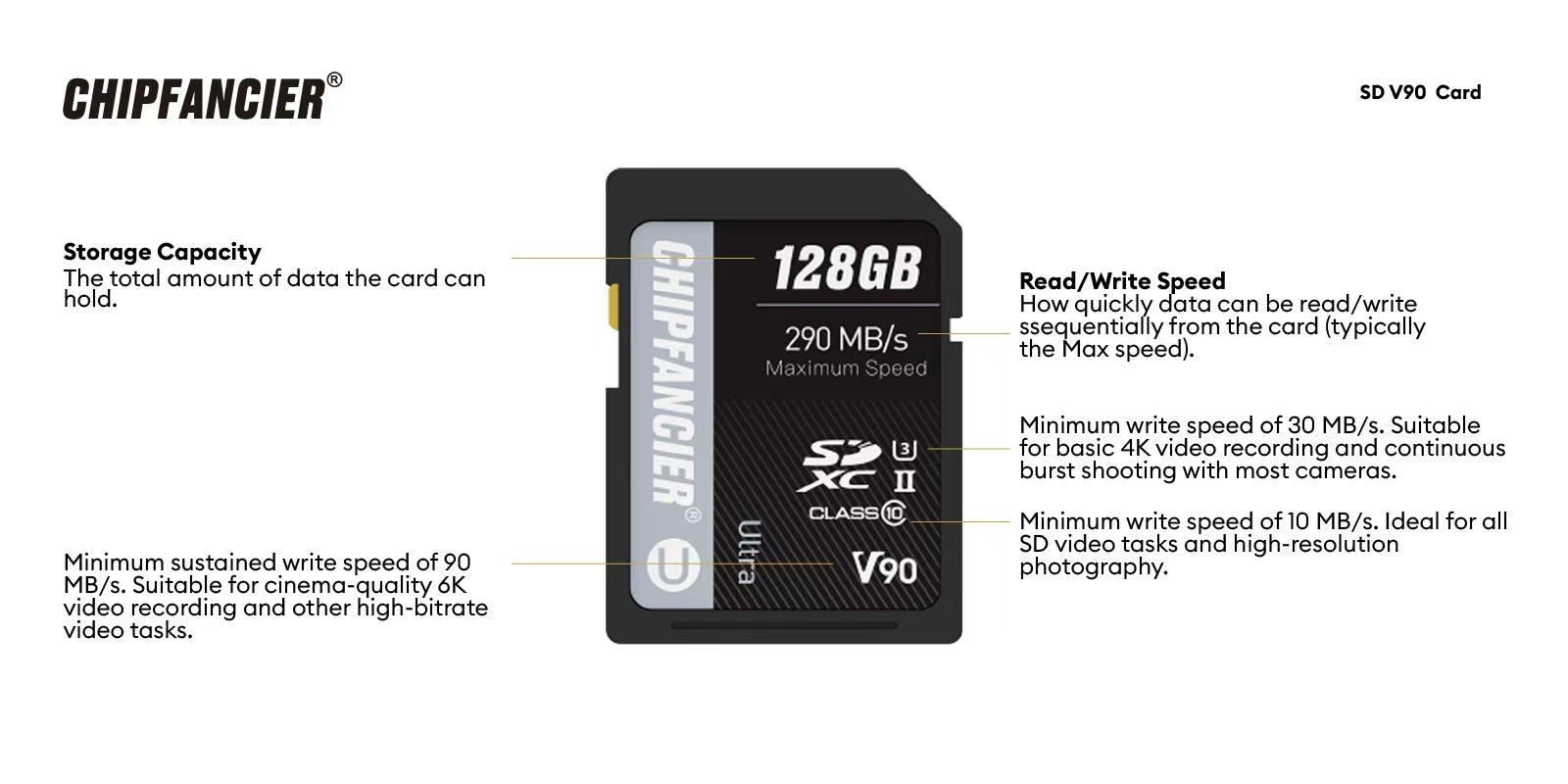
CFexpress Type A is the smaller of the two CFexpress form factors, built specifically because Sony wanted CFexpress-level performance in a card the same physical size as SD. A VPG800-rated Type A card guarantees sustained write speeds of at least 800MB/s — several times faster than even the fastest SD cards.
Why it matters in real shooting scenarios:
- Handles 4K 120p, 8K recording, and high-bitrate RAW/ProRes RAW without the buffer bottlenecks that push SD cards to their limit
- VPG800 specifically ensures performance doesn't degrade mid-recording, which is critical for long interviews, live events, or any take you can't reshoot
- Dual-slot cameras that mix an SD slot with a Type A slot let you use SD for backup/proxy and Type A for your primary high-bitrate master
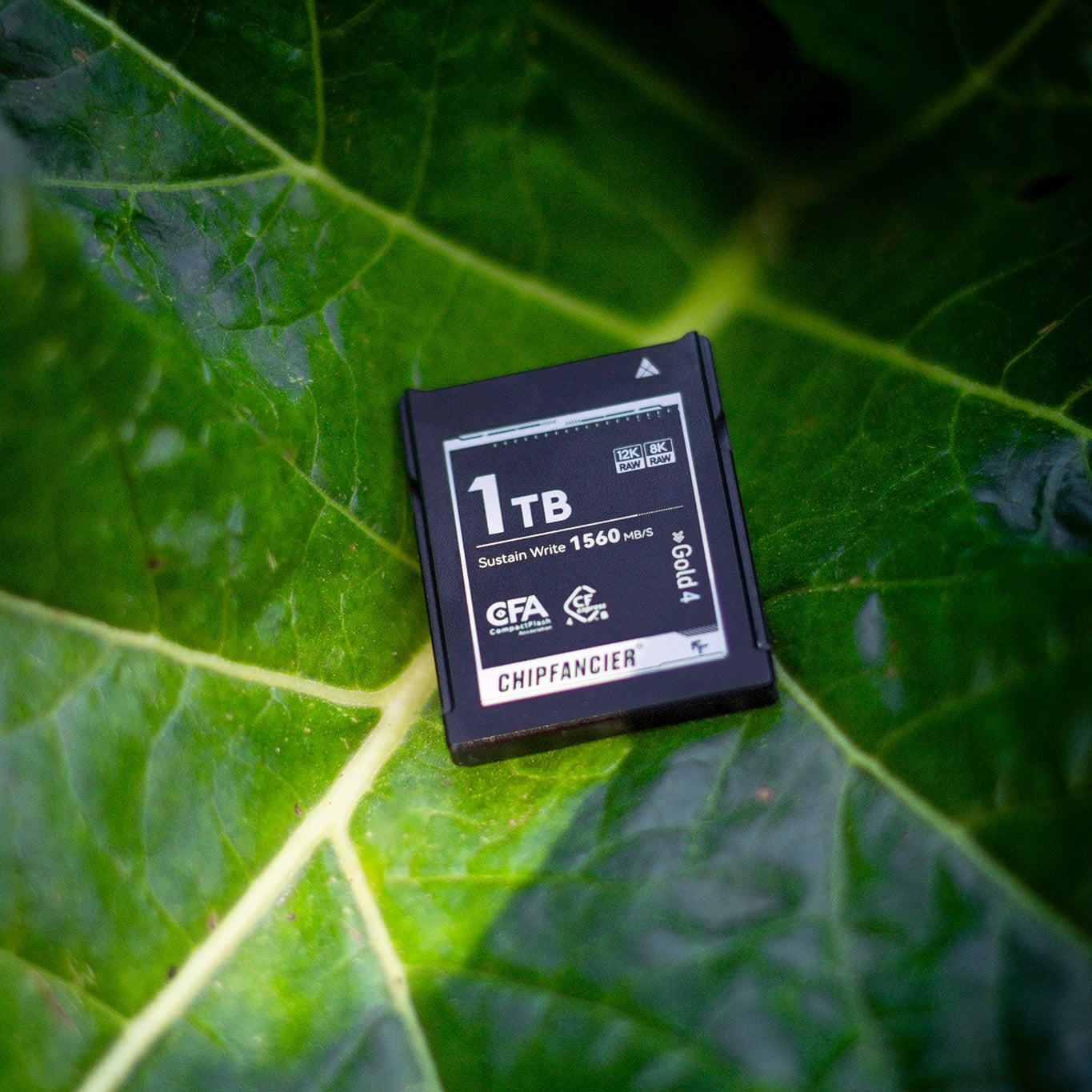
One practical advantage worth calling out: CHIPFANCIER's VPG800-rated Type A cards are now available at up to 2TB capacity. Pairing the guaranteed sustained speed with that much headroom means fewer card swaps mid-shoot and less time spent managing storage during long interviews, live events, or full-day production days — a meaningful workflow improvement for anyone shooting high-bitrate footage for extended periods.
Trade-off: Type A cards are more expensive per GB than SD, and while adoption is growing, they're currently used by a narrower set of camera bodies — mostly Sony's professional mirrorless line.
CFexpress Type B: Built for the Highest-End Cinema and Photo Workflows
Best for: Cinema cameras (RED, Canon Cinema EOS, Blackmagic), high-end mirrorless flagships (Canon R5/R5 C, Nikon Z9, Panasonic S1H), sports photographers shooting massive RAW burst sequences.
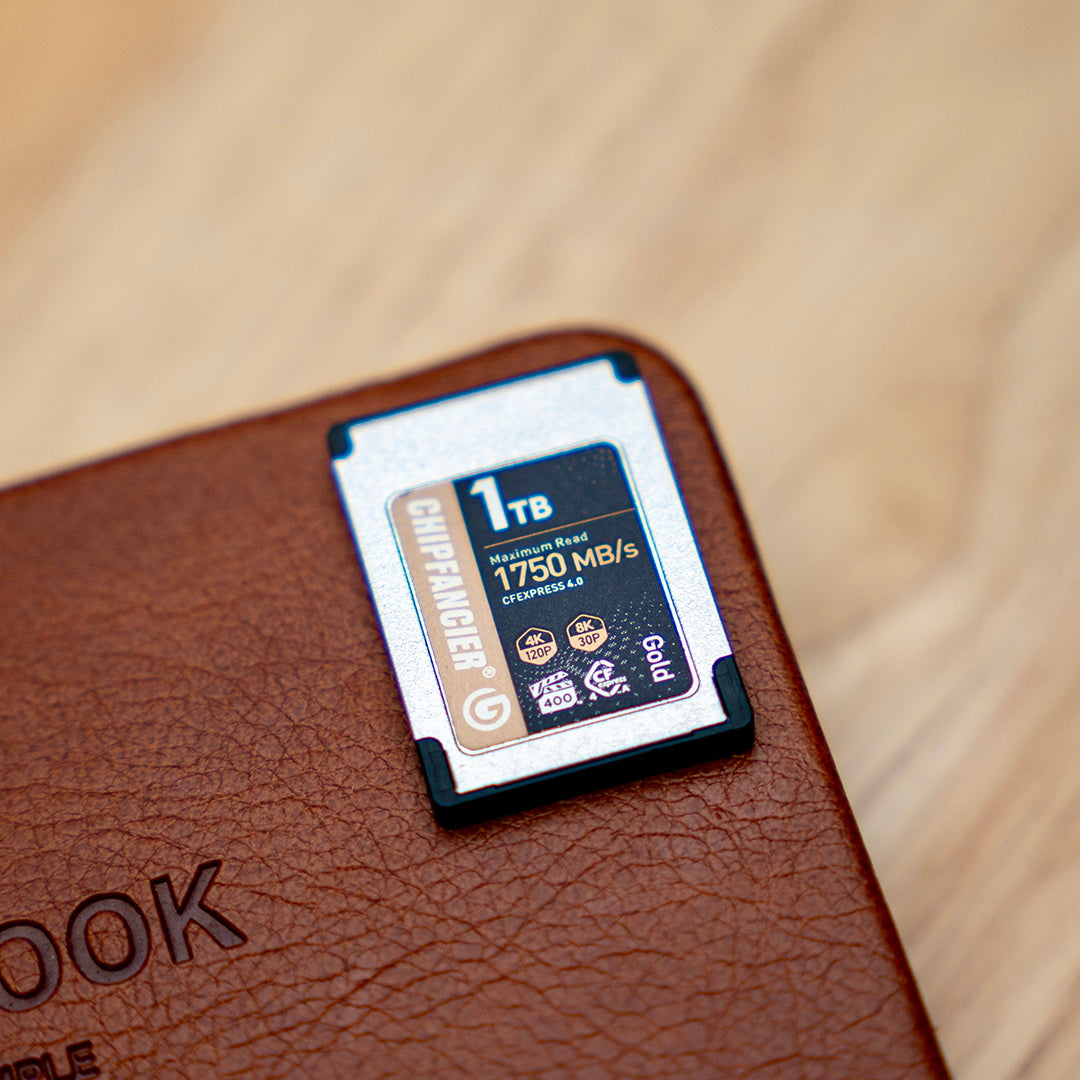
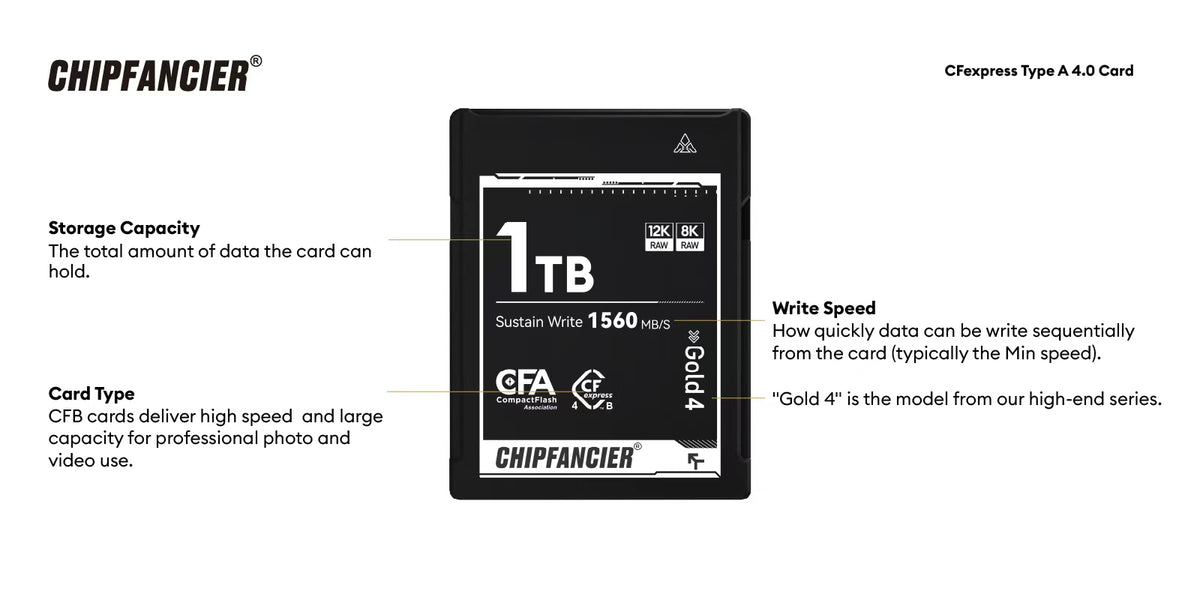
CFexpress Type B is physically larger than Type A and built on a faster PCIe/NVMe interface, capable of sequential speeds well beyond 1,000-1,700MB/s depending on the card. This is the format of choice when you're recording internal RAW video, 8K cinema footage, or shooting hundreds of uncompressed RAW frames per burst on a high-megapixel body.
Why professionals rely on Type B:
- Sustains the extreme write throughput needed for internal RAW/ProRes RAW recording on cinema and high-end mirrorless bodies
- Handles massive continuous burst sequences on 45+ megapixel sensors without the buffer filling up
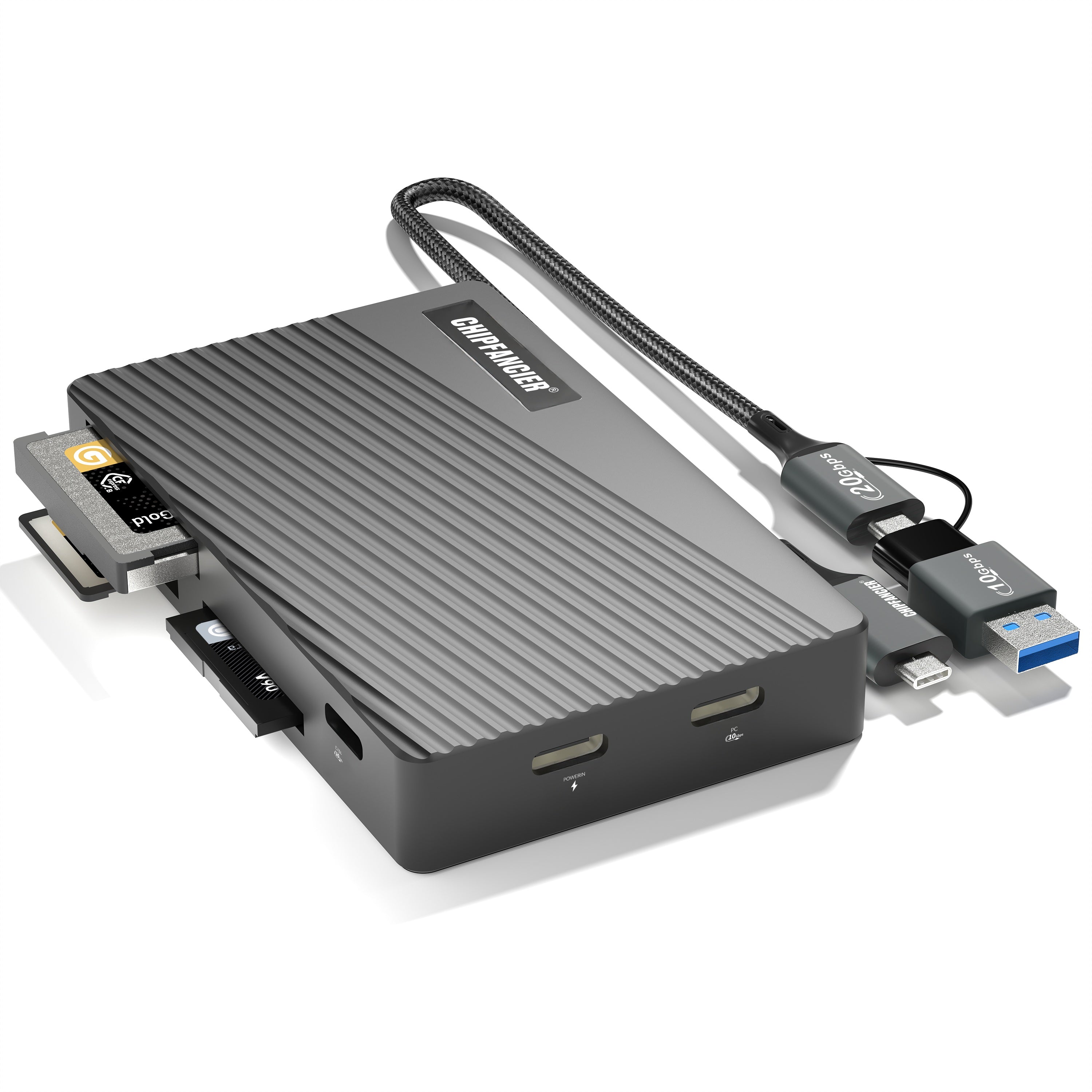
- Faster offload to editing workstations post-shoot, which matters on tight production schedules
For productions that generate very large amounts of RAW or high-bitrate footage in a single session, CHIPFANCIER's Type B cards are also available in capacities up to 4TB.
Trade-off: Higher cost, larger physical size (won't fit SD/Type A slots), and it's genuinely more capacity than most photographers or casual videographers need. This format is for workflows where the camera body specifically requires or benefits from it.
Quick Comparison
| Format | Guaranteed Sustained Speed | Best For | Typical Cameras |
|---|---|---|---|
| SD V90 | 90MB/s+ | 4K/high-fps video, professional photo bursts | Sony Alpha, Panasonic Lumix, Nikon Z, Fujifilm |
| CFexpress Type A (VPG800) | 800MB/s+ | 4K 120p, 8K, ProRes RAW on compact bodies | Sony A7S III, A1, A9, FX3/FX6 |
| CFexpress Type B | 1,000MB/s+ | Cinema RAW, 8K internal recording, high-res burst | RED, Canon Cinema/R5, Nikon Z9, Blackmagic |
How to Choose
- Check your camera's manual first. Every camera specifies a minimum required speed class for its highest video/photo modes — that's your non-negotiable floor.
- Match the format to your card slot. Type A and Type B are not interchangeable, and neither fits an SD slot.
- Buy for your most demanding use case, not your average one. If you occasionally shoot 8K or high-fps slow motion, your card needs to handle that mode even if it's not your everyday setting.
- Don't chase marketing "max speed" numbers. Look for the guaranteed sustained rating (V90, VPG800) — that's the number that determines whether your footage actually records cleanly start to finish.
- Not sure if a specific card is compatible with your camera model? Use our Compatibility Checker to confirm before you buy
Whether you're building a proxy/master workflow with SD and CFexpress Type A side by side, or running a full CFexpress Type B pipeline for cinema production, the right card isn't about buying the fastest thing available — it's about matching the guaranteed sustained speed to what your camera and workflow actually demand.